


The premier publication for plaintiff law
The first jury blamed the boy. The retrial: $81 million.
Juror attitudes went national. The data can see it, and it changes your whole case list.

By Adam Ramirez — 4 min read
Michael Madsen was 11. He had the walk signal. A truck turned right and killed him.
The first jury gave his family nothing. They blamed the boy.
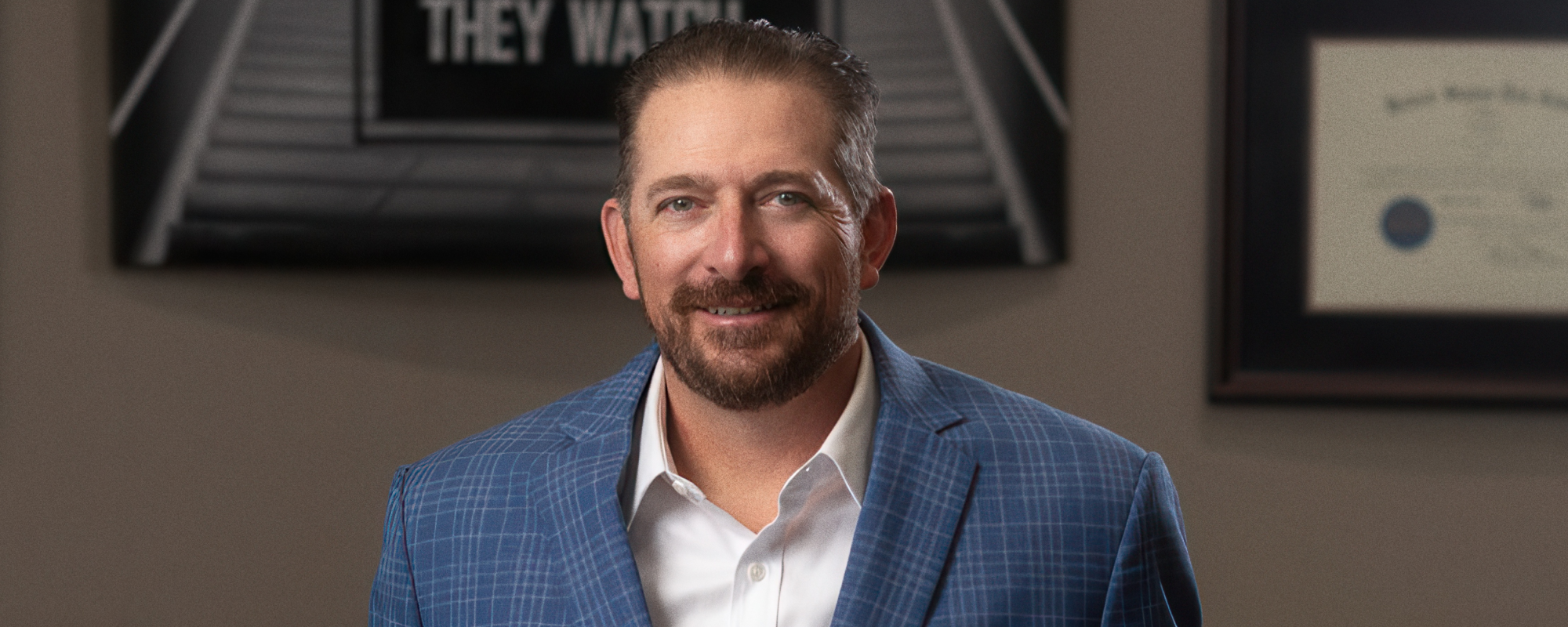
So when Sean Claggett took the retrial, every lawyer he respected told him the same thing. You can't win big in Provo. Too conservative. Wrong venue. Take the deal and go home.
In March, that jury came back with $81 million. A record for the state.
The money was never the point, and Claggett will tell you that himself. But it's the only justice the system has to give, and this family nearly didn't get it.
Not because the facts were thin. Because of a myth, and it's probably costing you cases right now.
Juror attitudes went national. The data can see it.
Claggett's theory: people everywhere now drink from the same handful of media firehoses. The 50-year-old who gets all his news from one channel thinks about your case the same way whether he's seated in Provo or Pittsburgh. The feed replaced the geography.
When Claggett and his data partners started running big studies, they assumed they had to recruit jurors from the trial venue, because that's what everyone is taught. Then they tested it. They pulled panels at random from across the country, and the results came back just as accurate. Venue barely moved the number.
So "you can't win here" is just noise now. The week we talked, he says, two verdicts came in from exactly the places the playbook writes off: $101 million in rural North Carolina, $30 million in rural South Carolina.
The lesson isn't that venue never matters. It's that you don't get to use it as an excuse anymore, to undervalue a case or to pass on one. If you're triaging your case list by zip code, you're leaving the best cases of your career on the table.
The same instinct ran the whole trial
That data-first reflex didn't stop at picking the venue. It ran the trial. The defense had video of Michael running into the crosswalk, and they built their case on it. Claggett didn't fight the video. He used the defense's own expert to tell the jury that running the instant the walk signal turns on is exactly what people do, and that it was the driver's job not to hit him.
Every night during the retrial, he fed the defense experts' own cited materials, the books and references they swore by, into Eve and asked one question: does their opinion hold up against their own sources? When it didn't, he knew before they did.
None of that is instinct. All of it is preparation you can finally do.
Claggett wrote a piece for us that still makes most lawyers flinch: how you find the real value of a case before you ever pick a jury, and why the big-number "anchoring" move you were taught is a myth. It's the most useful thing I've read on case value in a long time. Read Sean's piece.
One more thing.
You have seen this one. Everyone has seen this one. And if you happen to be the last lawyer in America who hasn't, stop reading, go watch it, and come back, because the rest of your weekend depends on it.
When COVID moved every hearing to Zoom, the bar learned what every parent on a work call already knew. Nobody can find the mute button, and no human alive can turn off a filter once it locks on.
So in February 2021, a Texas lawyer named Rod Ponton logged into a civil hearing as a small, despairing white kitten. Wet eyes darting around the room. The filter was stuck and he could not kill it.
Here's the part that makes it immortal. In a flat, businesslike monotone, the kitten informed the court that it was prepared to go forward with the hearing. A kitten, on the record, fully prepared to argue a contraband case.
Then, for the record, it added: "I'm here live. I'm not a cat." The judge, a saint, allowed that he could see that. From there he set about the delicate business of walking a kitten through the Zoom settings. While the kitten watched, powerless to assist.
It is the most relatable thing that has ever happened to this profession. Every one of us has stood before a tribunal, certain we had it handled, while some piece of technology we did not understand betrayed us in front of everyone. His just had whiskers.

Hit reply and tell me the "bad venue" in your state you've been warned to fear, and whether you've ever beaten it. I read every response. Shout out to the readers who have reached out already. Keep 'em coming.
Stop triaging by zip code,
~ Adam
Quote of the week:
“Almost every big verdict happening in this country right now is using data. That's just what's happening.”
- Sean Claggett, founder of Claggett & Sykes Trial Lawyers. He predicted $78 million. The jury said $81 million.
Past Issues
- Issue 020
You paid to be scared, not hurt
- Issue 019
What John Morgan's $1B can't buy
- Issue 018
State Farm filed seven fake cases
The Tort Report
One email a week on the verdicts, the AI, and the money reshaping plaintiff law. Read by 500 leading plaintiff firms.
We could not load the signup form. Email us and we will add you to The Tort Report.
Email us