


The premier publication for plaintiff law
You paid to be scared, not hurt
Why the chainsaw is fine and the unmarked curb is a lawsuit.

By Adam Ramirez — 5 min read
The first time I paid someone to chase me with a chainsaw, I was sitting on a hay bale in the desert.
It was Nightfall, the Halloween takeover of Old Tucson Studios, the Western movie set where Tombstone was partially shot. I was in law school in Tucson, and every October the place filled with zombies and clowns. The haunted hayride featured a man with a chainsaw who had decided you, specifically, were the one.
I got on that wagon a confident law student. I got off having found a gear in my legs I didn’t know existed.
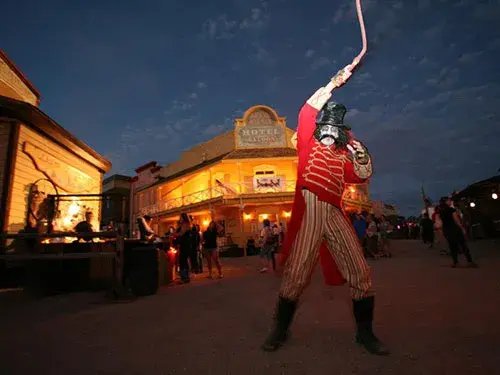
I loved every second. I had also, as my Torts professor taught me, assumed the risk. That phrase is getting a workout this month, because haunted attractions are having their day in court.
The scare is the product. The curb is a premises case.
Last October, a 16-year-old walked out of The Slaughterhouse, a haunted attraction in Tennessee. According to the lawsuit her mother filed, a costumed actor followed her past the exit and kept chasing. She fell off an unmarked curb onto the asphalt. The complaint says her injuries were severe and permanent and required surgery, and the family is asking for up to $1.5 million plus punitive damages.
Every haunt defense lawyer will reach for the same argument: she bought a ticket to be chased. That’s true, and it’s also exactly where the argument runs out. What a customer consents to at a haunted house is being frightened inside the attraction. The dark, the strobe lights and the guy with the chainsaw are the whole product. No jury is going to hand down a verdict because a clown said boo.
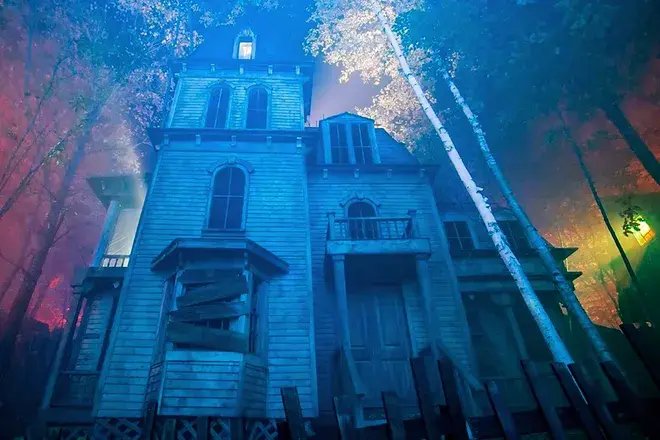
The complaint goes after something else: an exit with no warning signs, no cones, no caution markings, and not enough light to see the drop. That’s a parking lot claim. The actor just gave her a reason to be running when she hit it. Tennessee folded implied assumption of risk into comparative fault years ago, so the fight becomes how much of that fall belongs to the operator who put a dark, unmarked curb at the end of a chase.
Plead the boring defect
The other cases in the haunt docket follow the same pattern.
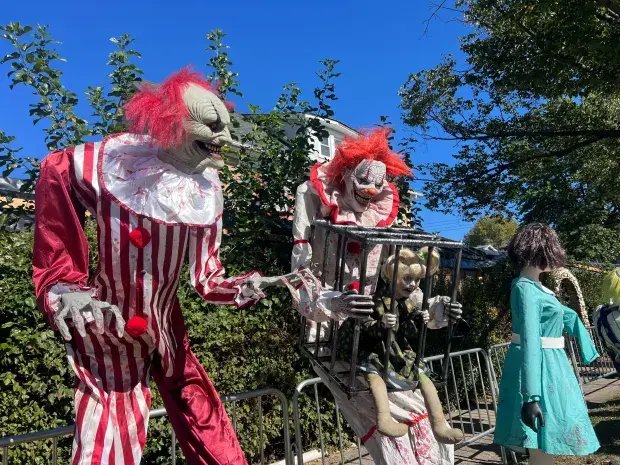
In Queens, a family-run attraction called A Haunting in Hollis drew lawsuits from at least five people. One says he slammed into a wall at the bottom of a two-story slide called “Satan’s Slope” and suffered a compression fracture in his spine. The city temporarily shut the place down.
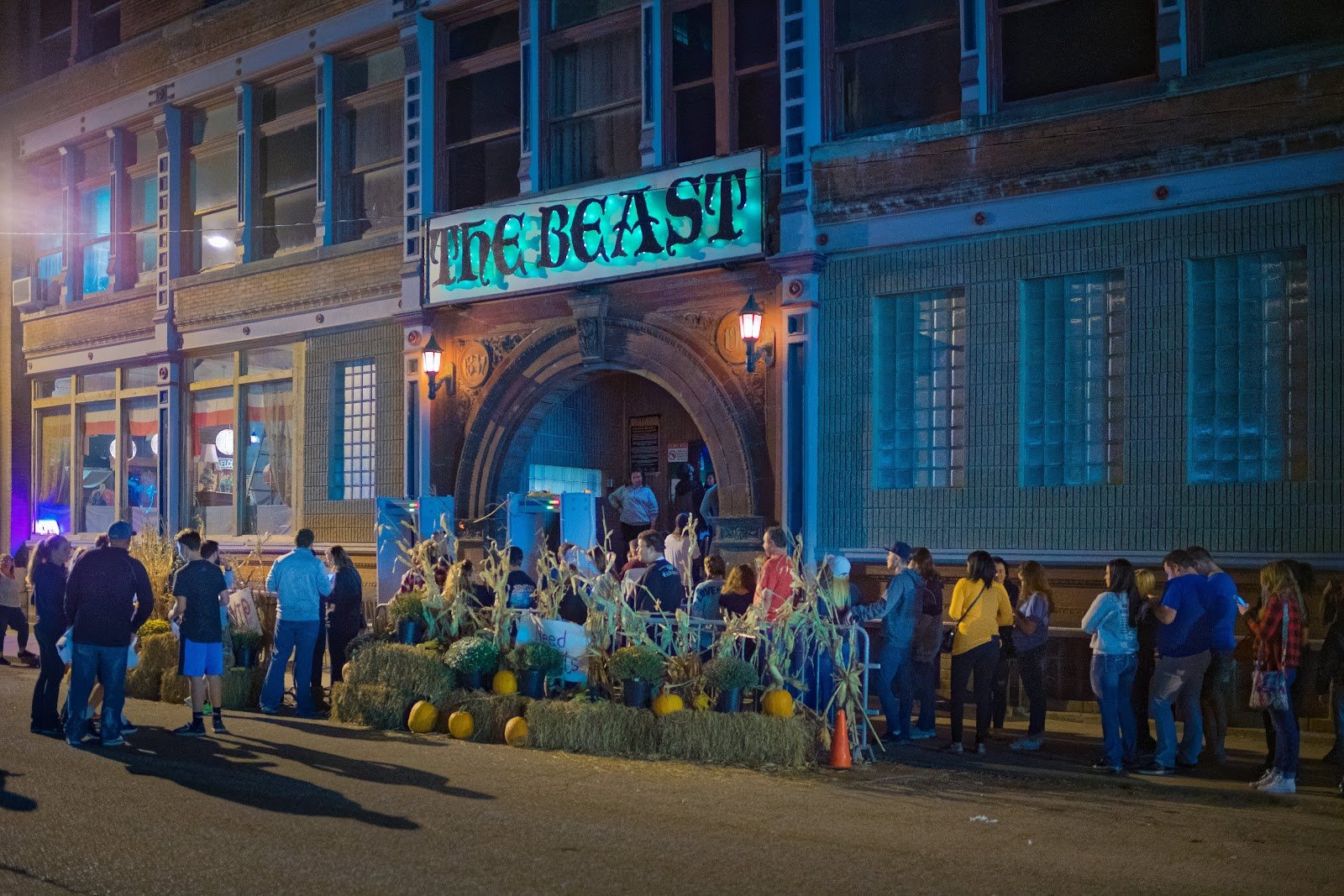
In Kansas City, a Nebraska woman says she broke both ankles jumping from a second-story window onto an air pad at an attraction called The Beast. Her suit claims the pad was under-inflated, badly placed, and unsupervised.
Take the costumes off and these cases are a curb, a wall too close to a slide, and an air pad without enough air. Those are facts a juror understands from their own life, and they’re facts most waivers struggle to reach. Nearly every haunt makes you sign a release. Read it closely. A lot of states won’t enforce one against gross negligence, and language about “being startled” stretches pretty thin when the claim is a deflated landing pad.
Discovery is where these cases get good. Haunts run the same gags every night for six weeks, so prior incident logs are a gold mine for notice. Ask how actors are trained on where the chase stops. Ask who checks the pad pressure and how often.
One more thing
Halloween is an American contact sport. I’ve lived in Colombia, Italy, Germany, and Argentina, and in none of them did adults pay good money to be chased through the dark by a stranger with power tools.
The one real haunted house I’ve found outside the U.S. was on Bonaire, a Dutch island in the Caribbean. I’d gone scuba diving there over Halloween. Someone had cobbled together a haunt and I was ready to be terrified.
The scares were real enough. A guy in a mask lunged from behind a curtain, and our whole group screamed. Before anyone had finished, a man with a flashlight stepped out of the dark, said very calmly, “Okay, come with me,” and pointed the beam at the floor. He walked us to the next room like a flight attendant during an evacuation, calling out every step.

When a zombie lurched at us there, we screamed again, and there he was, flashlight down, letting us know about a small step on the left.
It was the least frightening haunted house I’ve ever been through and easily the best lit. That man was a one-person risk management department with a Maglite. Every haunt in this issue should be trying to poach him and every lawyer reading this should be glad they haven’t.
My toughest client is four.
I've since retired from haunted houses and joined the pumpkin patch circuit. My daughter is four, and we have never missed a pumpkin patch season. The pumpkins are not the main event.
The bunnies are.
She races past several acres of gourds to the petting pen like she's late for trial, then scoops up every rabbit she can reach, one under each arm. I spend twenty minutes saying "please put that one down" while the teenager running the pen looks at me, then at the sign that says one bunny at a time, then back at me.

Eventually I pop her on my shoulders and hightail it out of there while she negotiates for one more trip to the bunnies.
Somewhere between Tucson and the bunny pen, I became the flashlight guy. I used to pay strangers to chase me with a chainsaw. Now I spend October trailing a four-year-old through a pumpkin patch, calling out every step.
~ Adam
P.S. Hit reply and tell me about a case, a gripe, a story you’ve never told. I read every one, and the best could end up in a future issue.
Quote of the week
"We’re not against fun, but our contention is when fun is your business, safety must be your priority."
— Yan Gilkarov, attorney for plaintiffs suing a Queens haunted house.

Past Issues
- Issue 019
What John Morgan's $1B can't buy
- Issue 018
State Farm filed seven fake cases
- Issue 017
The NFL got served
The Tort Report
One email a week on the verdicts, the AI, and the money reshaping plaintiff law. Read by 500 leading plaintiff firms.
We could not load the signup form. Email us and we will add you to The Tort Report.
Email us